The general contractors test is a required licensing exam that proves you have the knowledge to manage construction projects safely and legally. Here’s a quick overview of what to expect:
In California, the process runs through the Contractors State License Board (CSLB). You must pass a trade exam and a Law & Business exam before your license is issued. Other states use programs like NASCLA, which lets one exam count toward licensing in multiple states.
Passing the exam is not just a formality. It protects the public, verifies your skills, and opens doors to bigger projects and better career opportunities. The prep work you do now will pay off for years.
I’m Phil Cocciante, also known as The License Guru, and after spending five years working at the CSLB and helping thousands of contractors navigate the general contractors test and licensing process, I know exactly where applicants get stuck — and how to help you avoid those pitfalls. Let’s walk through everything you need to know to prepare with confidence.
When we talk about the general contractors test, we aren’t just talking about a hoop to jump through. This exam is the gatekeeper for public safety and consumer protection. Imagine if anyone with a hammer and a truck could claim they knew how to structurally reinforce a four-story building or manage a million-dollar payroll without any oversight. It would be chaos!
The exam ensures that you, as a professional, have a verified level of trade competency. It’s about more than just knowing which end of the nail to hit; it’s about understanding the complex web of state regulations that keep the industry running. For many of our clients, passing this test is the single biggest catalyst for career advancement. It shifts you from being an employee to being the boss, allowing you to bid on larger projects and build a legacy.
We often point our students toward our Contractor License Test: Your Comprehensive Test Prep Guide to Ace the License Exam to help them understand that this isn’t just a “trade” test. It’s a professional certification that proves you understand the “Business” side of “Building.”
In California, the rules are clear: if you’re performing work where the total cost (labor and materials) is $500 or more, you need a license. While some research suggests a $1,000 threshold in specific contexts, the CSLB generally holds to the $500 rule for most unlicensed activity enforcement.
The general contractors test is typically required for:
If you are looking to get started, our How to Get a General Building License in California: Step-by-Step Guide breaks down the specific classifications. While specialty trades like electrical or plumbing have their own exams, the General Building (B) license is the most versatile.
One common question we get is about “owner-builder” exemptions. While you can technically build on your own property, there are strict limits on how often you can do this and whether you can sell the property immediately. For anyone looking to make a living in construction, the exam is unavoidable.
The exam is usually split into two distinct parts: the Trade portion and the Law & Business portion. You can’t just be a great builder; you have to be a competent business owner.
The Law & Business section covers the “boring” but vital stuff: business law, project management, and safety regulations. You’ll be tested on how to handle workers’ compensation, how to stay compliant with Cal/OSHA, and how to manage your taxes. For a deep dive into the logistics of the testing day, check out CSLB Exam: What to Expect.
Success in construction starts before the first shovel hits the dirt. The general contractors test places a heavy emphasis on preconstruction activities. Based on national standards, preconstruction and contract administration can make up a huge chunk of your score—sometimes as much as 27% to 40% of the total questions.
You will need to master:
Once the contract is signed, the “Operations” phase begins. This is where your knowledge of building codes and site evaluation is put to the test. You’ll need to know the proper sequence for inspection scheduling and how to identify risks on a job site before they become expensive accidents.
Key topics include:
For contractors who don’t want to be tied down to just one state, the NASCLA Accredited Exam is a game-changer. NASCLA (National Association of State Contractors Licensing Agencies) created an exam that is accepted by multiple states. If you pass the NASCLA trade exam, you can use those results to satisfy the trade requirement in over a dozen states, including Nevada, Arizona, and many across the Southeast.
This multi-state portability is perfect for career mobility. Instead of taking a new trade test every time you cross a state line, you simply take the specific state’s Law & Business exam. We offer a specialized NASCLA Accredited Exam Prep Course to help you navigate this specific path.
The construction industry doesn’t stand still, and neither do the exams. NASCLA is preparing for significant updates in 2025 and 2026. Staying ahead of these changes is crucial for anyone planning to test in the next 18 months.
We recommend keeping an eye on industry events like The Economy in 2026: What to Watch & Why It Matters. Understanding economic forecasting can help you decide when to expand your business or when to buckle down. Additionally, the rise of AI-powered learning and new database software is changing how contractors manage their licenses. We’ve seen a trend toward more digital enforcement and stricter verification of experience, so don’t expect to “wing it” on your application.
You wouldn’t show up to a job site without your tools, so don’t show up to the testing center without preparation. We provide a variety of resources to ensure our students are ready:
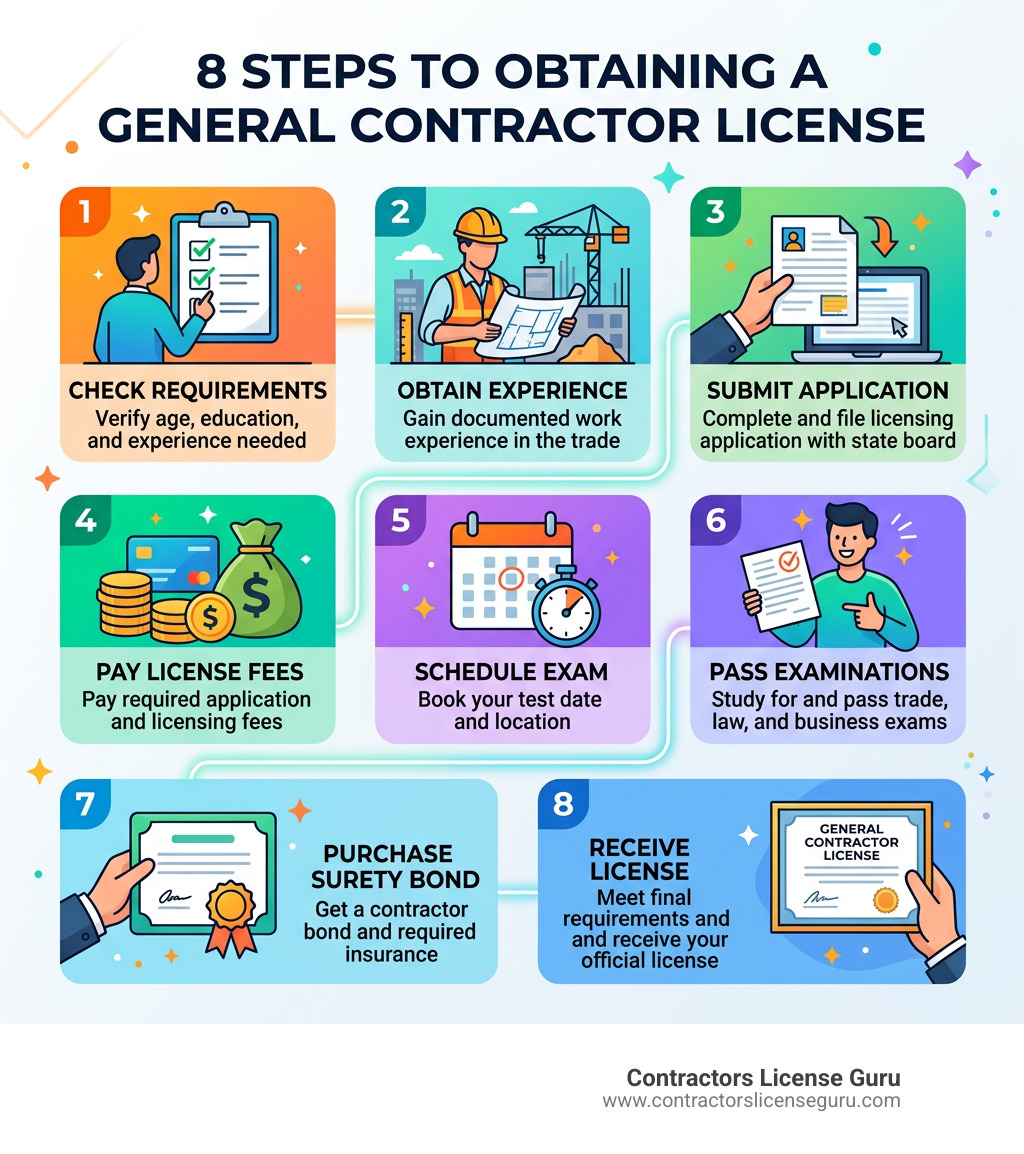
Once you’ve done the studying, it’s time for the logistics. The first step is the application submission to the CSLB. Once they approve your experience and background, you’ll receive a notice to schedule your exam.
In California, exams are often administered through third-party centers. Knowing how to schedule your contractors exams with PSI is a vital part of the process.
What to expect in the room:
Wait—did someone say open-book? Yes, but don’t get too excited. An “open-book” exam like the NASCLA trade exam or the California Asbestos exam is often harder because the questions are more specific.
To succeed, you need to:
We recommend you utilize Contractors License Guru study kits to learn the specific testing strategies needed to navigate these references under pressure.
This is a point of confusion for many. A Licensee is the business entity (the Corporation, LLC, or Partnership) that holds the license. The Qualifier is the individual person who actually takes the general contractors test to prove the entity is competent.
Types of Qualifiers:
It is vital that your qualifier has the Qualifying B General Contractors Experience required by the state. If the qualifier leaves the company, the license is typically suspended until a new qualifier passes the exam.
Passing the test is a huge milestone, but the CSLB has a few more hurdles for you.
The biggest requirement is Journey-Level Experience. In California, you must prove at least 4 full years of experience within the last 10 years. This experience must be at a journey-level, foreman, or contractor capacity. When applying for a B General Contractors License, you’ll need a “certifier” (usually a former employer or a fellow contractor) to sign off on your hours.
You will also need to complete a Live Scan background check. This fingerprinting process allows the CSLB to review your criminal history. Don’t worry—a past mistake doesn’t always mean a denial, but honesty is the best policy on your application.
You can’t build a house on a shaky foundation, and you can’t build a business on shaky finances. The CSLB requires all contractors to file a $25,000 contractor bond. This bond protects consumers if you fail to complete a project or pay your bills.
To prepare for the financial side of the business, our Law & Business Study Kit covers:
Beyond the standard trade exam, you might encounter the Asbestos Exam Requirements. All new applicants in California must complete an asbestos open-book exam. This doesn’t mean you are certified to remove asbestos—that requires a separate C-22 classification—but it ensures you know how to identify it and handle it safely.
Other specialized areas include:
The number of questions varies by state and classification. In California, the trade exam and the Law & Business exam typically consist of about 100 questions each. National exams like the Contract Administration portion of some state tests may have 60 questions. You should expect an equally weighted format and a duration of 1 to 5 hours. To pass, you generally need a score of at least 70%.
Getting licensed is an investment. You’ll need to account for:
If you take a state-specific exam in California, it generally stays in California. However, if you take the NASCLA trade exam, you can use those results to apply for licenses in multiple other states. You will still need to pass each state’s specific Law & Business exam. For more on how data and licensing are handled across borders, check out the NASCLA Licensing and Database Software Live Stream.
The journey to becoming a licensed professional is a marathon, not a sprint. The general contractors test is a challenging but rewarding obstacle that separates the amateurs from the pros. By focusing on your study materials, verifying your experience, and understanding the legal requirements of the CSLB, you are setting yourself up for long-term licensing success.
We’ve helped thousands of contractors just like you “hammer home the facts” and get their licenses without the headache. Whether you need a comprehensive Contractors License Exam Course Overview or just a bit of advice on your application, we’re here to help.
Ready to build your future? Let’s get to work.