
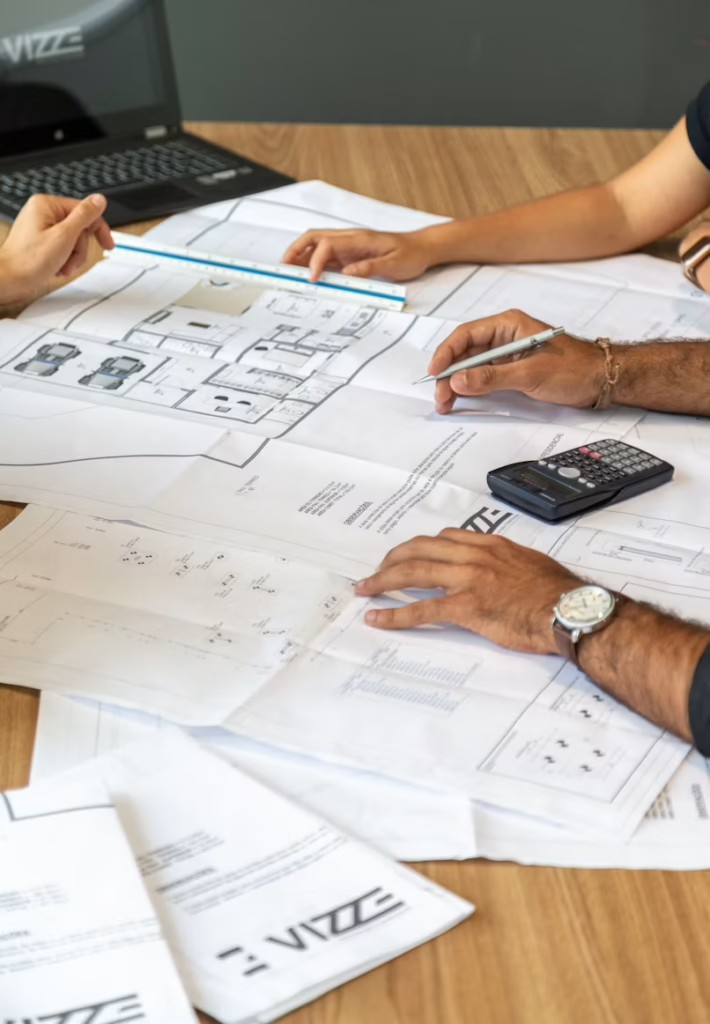
A lot of applicants search for the “California general contractor exam,” but the Contractors State License Board (CSLB) officially calls this classification B General Building.
The B General Building license is one of the most common California contractor license classifications, but the exam still catches applicants off guard. It doesn’t only test whether you’ve worked in construction. It also tests planning, estimating, framing, core trades, finish trades, safety, and the business responsibilities that come with holding a contractor’s license.
If you’re preparing for the general contractors license exam, here’s what you should know before test day.
When people talk about the California general contractor exam, they’re usually referring to the B General Building trade exam.
The B General Building classification applies to contractors whose work involves structures built for the support, shelter, and enclosure of people, animals, property, or movable objects. In general, B contractors are connected to projects involving at least two unrelated building trades or crafts, although there are specific rules around framing, carpentry, and specialty work.
If you’re still deciding whether B General Building is the right classification, review the California contractors license classifications before moving forward.
In most cases, yes.
General contractor applicants usually need to pass two separate exams:
The trade exam focuses on construction knowledge. The Law and Business exam focuses on the rules, contracts, finances, employment responsibilities, insurance, liens, and administrative requirements involved in operating a contracting business in California.
I’ve seen experienced contractors focus heavily on the trade side and underestimate the Law and Business exam. That can be a mistake. Knowing how to build is one part of licensing. Knowing how to operate legally as a licensed contractor is another.
If your application hasn’t been submitted yet, review the California contractor license application process so your exam prep and application timeline are aligned.
The B General Building test is divided into five main sections.
B General Building Exam Area | Approximate Exam Weight |
Planning and Estimating | 15% |
Framing and Structural Components | 20% |
Core Trades | 30% |
Finish Trades | 20% |
Safety | 15% |
The largest section is Core Trades, which makes up approximately 30% of the exam. That section can include areas such as plumbing, electrical, HVAC, concrete, earthwork, surveying, insulation, weatherproofing, and roofing.
That doesn’t mean you should ignore the smaller sections. Safety, planning, estimating, framing, and finish trades still represent a significant part of the test. But if you’re trying to prioritize study time, the percentages give you a clear starting point.
The B General Building test may cover topics such as:
For applicants preparing for this classification, the B General Building contractors license exam prep course can help organize the trade material into a more manageable study plan.
The Law and Business exam is separate from the B General Building trade exam, but most applicants still need to pass it.
This test focuses less on construction technique and more on what you need to know to run a compliant contracting business in California.
Law and Business Exam Area | Approximate Exam Weight |
Business Organization and Licensing | 13% |
Business Finances | 15% |
Employment Requirements | 20% |
Insurance and Liens | 12% |
Contract Requirements and Execution | 21% |
Public Works | 5% |
Safety | 14% |
The largest section is Contract Requirements and Execution, followed closely by Employment Requirements.
That makes sense. Licensed contractors are responsible for more than the work performed in the field. They also need to understand contracts, bidding, payments, payroll, workers’ compensation, hiring, supervision, business organization, and jobsite safety.
For many applicants, this is where exam prep becomes especially important. Field experience helps, but it doesn’t always prepare you for contract rules, licensing procedures, lien issues, public works requirements, or employment obligations.
If this is the exam area you’re most concerned about, review the Law and Business contractor exam study kit before test day.
The B General Building and Law and Business exams are closed-book tests.
The exam format is straightforward, but that doesn’t mean it’s easy.
Here’s what to expect:
That last point is important. If you’re unsure about a question, don’t leave it blank. Make the best choice you can and keep moving.
Some applicants also get caught off guard by construction math. You may need to work through measurements, area, volume, material quantities, estimates, labor costs, or unit conversions. Brushing up on math before exam day can make a real difference.
The general contractor test is manageable with the right preparation, but I’ve seen applicants make the same mistakes over and over.
Common exam prep mistakes include:
Strong field experience is valuable, but the exam is still an exam. It has its own structure, wording, and testing style.
If you want a clearer overview of the full study process, review the contractors license exam course overview and compare your current study plan to what’s actually being tested.
The CSLB provides official resources that can help applicants understand the exam process and classification requirements.
Helpful CSLB resources include:
These resources are helpful, but they can still feel overwhelming when you’re trying to turn the information into a real study plan. That’s where organized exam prep can help. Contractors License Guru offers organized study materials, practice exams, audio training, and video instruction designed for California contractors license applicants.
If you’re getting ready for the B General Building test, start with the right study materials and give yourself enough time to prepare.