Last updated: August 31st, 2026
A California contractor license course can help you prepare for the CSLB examinations that apply to your license and navigate the application process. But not every applicant has identical examination requirements, and not every prep course offers the same level of support.
Here are the main options:
California Contractor License Course Options:
What to Look for in a Course:
Getting your California contractor license can be challenging. Most applicants need to document qualifying experience, navigate the application process, and pass the examinations required for their particular license and classification.
However, exam requirements are not identical for every applicant. Some applicants may qualify for an examination waiver or may not be required to retake an examination they previously passed. The C-61 Limited Specialty classification also does not require a trade examination.
The right course should therefore do more than throw practice questions at you. It should help you understand what CSLB actually requires in your situation and prepare you for the examination or examinations you need to take.
Most aspiring contractors are experienced in their trade but may be less familiar with subjects covered by the Law and Business examination, including contracts, mechanics liens, employment requirements, business finances, and safety regulations.
The Trade examination, when required, focuses on knowledge associated with your specific classification.
I’m Phil Cocciante, and I’ve spent over 20 years helping contractors navigate the CSLB licensing process, including five years working inside the Contractors State License Board. My experience reviewing applications and preparing contractors for their exams has shown me what separates useful California contractor license courses from programs that don’t give applicants the support they actually need.
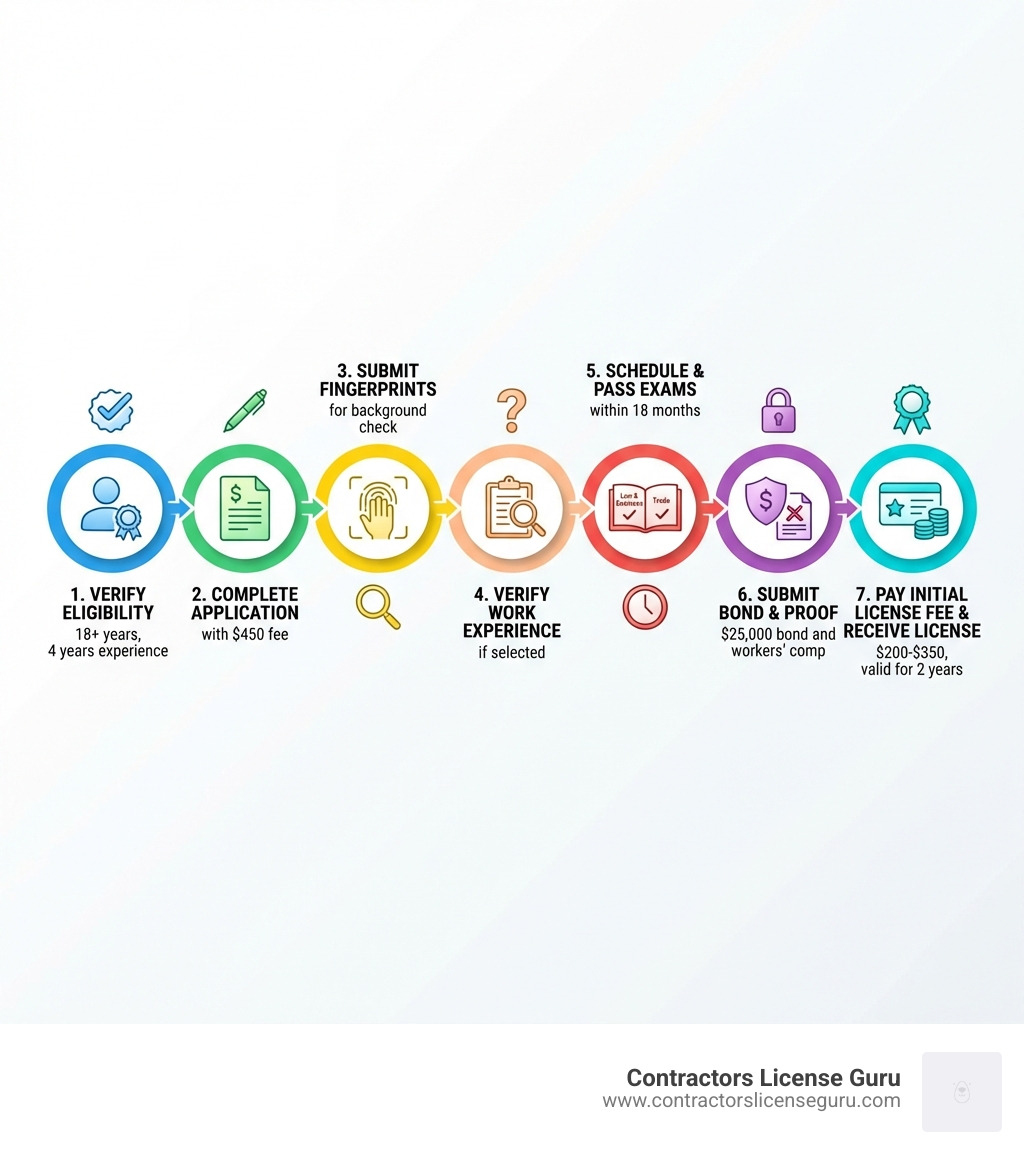
Before you even look for a California contractor license course, you need to know whether you are eligible for a license and which examination requirements apply to you.
The Contractors State License Board (CSLB) regulates contractor licensing in California, including license classifications, experience requirements, examinations, bonds, and license issuance.
One important number to understand is $1,000.
California generally requires a contractor license if any of the following apply:
The minor-work exemption applies only when all three conditions are satisfied: the total project cost is less than $1,000, no building permit is required, and no employee labor is used.
You also cannot divide a larger project into smaller contracts to avoid the licensing requirement.
If you’re caught contracting without a required license, California can impose criminal and administrative penalties.
Applicants generally must:
You can find more information through the Official CSLB Applicant Resources or read our guide on How to Get a Contractor’s License in California.
The $1,000 project value is one licensing trigger, but it is not the only one.
A contractor license is generally required if the project costs $1,000 or more, requires a building permit, or uses employee labor.
For the minor-work exemption to apply:
All of those conditions must be met.
Whether you are applying as a sole owner, partnership, corporation, or LLC, the person serving as the qualifying individual must satisfy CSLB’s applicable experience and licensing requirements.
If you’re unsure which classification fits the work you perform, reviewing the California Contractors License Classifications can help you narrow down your options.
One of the biggest hurdles for many applicants is documenting the required qualifying experience.
A journey-level worker is someone who is fully qualified to perform the trade without supervision. CSLB generally requires applicants to document four years of qualifying experience within the 10 years immediately preceding the application, subject to applicable exceptions and experience-credit rules.
Relevant education can sometimes provide credit toward part of the experience requirement.
Depending on the education and its relationship to the classification, CSLB may grant education credit for qualifying college degrees, coursework, or other recognized education.
However, the amount of credit depends on the applicant’s specific education and classification. Applicants should review current CSLB experience requirements rather than assuming a particular degree automatically replaces a fixed number of years.
Not necessarily.
This is an important distinction that a good California contractor license course or licensing service should identify before telling you what study materials to buy.
For a typical first-time applicant, licensing usually requires:
But there are exceptions.
Under CSLB rules, an examination may not be required when the qualifying individual has, within the applicable period:
The exact requirements depend on the applicant’s history and the type of application being submitted.
California law also provides specific examination waiver provisions.
Certain applicants may qualify for a waiver under Business and Professions Code sections 7065, 7065.1, 7065.2, and related provisions when all applicable conditions are satisfied.
Depending on the waiver, only the Trade examination may be waived, while the Law and Business examination may still be required.
Reciprocity with another state can also result in a Trade examination waiver when the applicant and classification meet CSLB’s reciprocity requirements.
Applicants for a C-61 Limited Specialty classification are not required to take a Trade examination.
The Law and Business examination may still apply unless the applicant separately qualifies for an exemption or waiver.
The takeaway is simple: don’t buy exam preparation materials until you know which exams CSLB will actually require you to take.
You can review CSLB’s current contractor license application and examination requirements before deciding what preparation you need.
Choosing a California contractor license course isn’t just about finding the cheapest option. It’s about finding a program that helps you understand and retain the material CSLB expects you to know.
Be cautious when comparing schools based solely on advertised pass rates.
Unless a provider explains how its pass rate is calculated, how many students are included, and whether the results are independently verified, a percentage by itself doesn’t tell you much.
Instead, compare what you’re actually getting.
Look for courses that offer:
You can also use our Online Practice Exams to reinforce the material you’re studying.
You might be an excellent plumber, electrician, welder, or general builder without being an experienced test-taker.
The Law and Business examination covers subjects that many contractors don’t deal with in a formal classroom setting, such as contracts, business finances, employment requirements, mechanics liens, and state licensing law.
A specialized course can help turn those subjects into manageable study areas.
It can also teach you how to approach multiple-choice questions efficiently and identify which areas deserve more study time.
Don’t assume that every CSLB examination has the same number of questions or identical testing parameters.
Exam content depends on the examination and classification. CSLB publishes individual study guides that identify the topic areas and weighting for each examination.
Before test day, review the official CSLB Examination Study Guide for the exam you’re actually taking.
There is no single universal price for a California contractor license course.
Different providers package their programs differently, so comparing only the advertised price can be misleading.
Instead, compare the total value and what’s actually included.
Ask:
A cheaper program can become expensive if you later need to purchase additional materials or application assistance separately.
Likewise, the most expensive program isn’t automatically the best.
The goal is to find the course that gives you the materials and support you actually need.
Contractors License Guru offers California contractor license exam preparation courses with study materials, practice exams, online access, audio and video instruction, and application review.
Once CSLB accepts your application and determines that an examination is required, you’ll receive information about scheduling your test.
Most first-time applicants who do not qualify for an exemption or waiver will take:
But, again, there are exceptions.
An applicant may have one or both examination requirements waived depending on prior examination history, prior service as a qualifying individual, statutory waiver provisions, or other applicable rules.
C-61 Limited Specialty applicants do not take a Trade examination.
CSLB examinations are multiple-choice. The specific content, weighting, and other exam details depend on the examination being administered.
Do not assume every CSLB exam has an identical number of questions or that every examination follows one universal format beyond the general computer-based multiple-choice testing process.
Use the CSLB study guide for your particular examination to see what subjects you need to prepare for.
The Law and Business examination covers several major areas related to operating a contracting business in California.
Topics include subjects such as:
The official CSLB Law and Business study guide is the best place to confirm the current exam content before you begin preparing.
A good California contractor license course should help you understand these subjects rather than simply memorize answers to practice questions.
When a Trade examination is required, its content depends on the license classification.
For example, a Class A General Engineering examination will cover different technical knowledge than a C-10 Electrical, C-36 Plumbing, or C-60 Welding examination.
Depending on the classification, Trade exam subject areas can include:
The exact subjects and their weighting vary.
That’s why you should use preparation materials built specifically for your classification, not a generic construction test-prep package.
CSLB publishes a separate Examination Study Guide for each applicable classification.
A license is more than just a passing grade on an exam.
Exam preparation is only one part of the licensing process. Applicants also have to deal with experience documentation, business structure, application preparation, bonding, fingerprints, and final issuance requirements.
That’s why the support included with a course can matter almost as much as the study materials.
Contractors License Guru provides California Contractor License Services covering application preparation, exam preparation, licensing guidance, and related CSLB requirements.
Small application errors can create unnecessary delays.
An application-support service can help you review:
If you think you may qualify for an examination waiver, determine that before purchasing unnecessary Trade exam preparation materials.
Passing your required examinations doesn’t automatically make your license active.
Depending on your particular license, CSLB’s issuance requirements may include:
CSLB will tell you which issuance requirements apply after you’ve completed the applicable examination process.
There is no universal timeline.
How quickly you’ll be ready depends on:
Some contractors may need only a short review, while others benefit from several weeks or more of structured preparation.
Don’t choose a course simply because it promises to make you “exam ready” within a specific number of days.
Choose one that gives you enough access to actually learn the material.
In some cases, yes.
CSLB can grant credit for qualifying education depending on the degree, coursework, and its relevance to your classification.
Education does not automatically replace the entire practical-experience requirement, and the amount of credit depends on your circumstances.
Review CSLB’s current experience-credit rules before calculating your eligibility.
No.
Many first-time applicants take both the Law and Business and Trade examinations, but waivers and examination exemptions can apply.
Depending on your history, you may qualify for no examination, a Trade examination waiver, or another examination exception.
Examples can include:
Always determine your CSLB examination requirements before buying a course.
If you don’t pass on your first attempt, don’t panic.
California gives applicants an eligibility period in which to complete their required examinations. Retesting rules and fees apply after an unsuccessful attempt.
Use your score report to identify the areas that need more work, then focus your preparation on those topics before retesting.
A good exam-prep course should help you understand where you went wrong instead of simply having you repeat the same practice questions.
They can be one piece of information, but don’t rely on a pass-rate percentage by itself.
Before treating an advertised pass rate as meaningful, ask:
Without that context, two schools’ percentages may not be comparable.
It’s usually more useful to evaluate the actual course materials, access period, support, application assistance, student reviews, and guarantee terms.
Obtaining your license is a major step, but you don’t have to navigate the process blindly.
The best California contractor license course isn’t necessarily the cheapest, the most expensive, or the one with the biggest advertised pass-rate number.
Look for a program that:
Most importantly, determine whether you actually need to take the Trade exam, Law and Business exam, or both before purchasing your study materials.
At Contractors License Guru, we provide exam preparation, application assistance, and licensing guidance from someone who has worked inside the CSLB application process.
Ready to take the next step? Read our complete guide on How to Get a Contractor’s License in California or explore our California contractor license exam preparation courses to start preparing.
