
LLC annual report filing is the process of submitting a required update to your state each year (or every two years in some states) to keep your business legally active. Here is a quick overview of what it involves:
Many contractors are surprised to learn that forming an LLC is just the beginning — keeping it legally active requires ongoing filings. Miss a deadline, and your liability protection could be at risk.
As a California contractor, staying compliant with your state and maintaining your CSLB license go hand in hand with keeping your LLC in good standing. This guide walks you through exactly what you need to do.
I’m Phil Cocciante, and with over 20 years of construction industry experience — including five years as a license application technician at the CSLB — I’ve seen how overlooked compliance steps like LLC annual report filing can put a contractor’s business at risk. Let’s make sure that doesn’t happen to you.
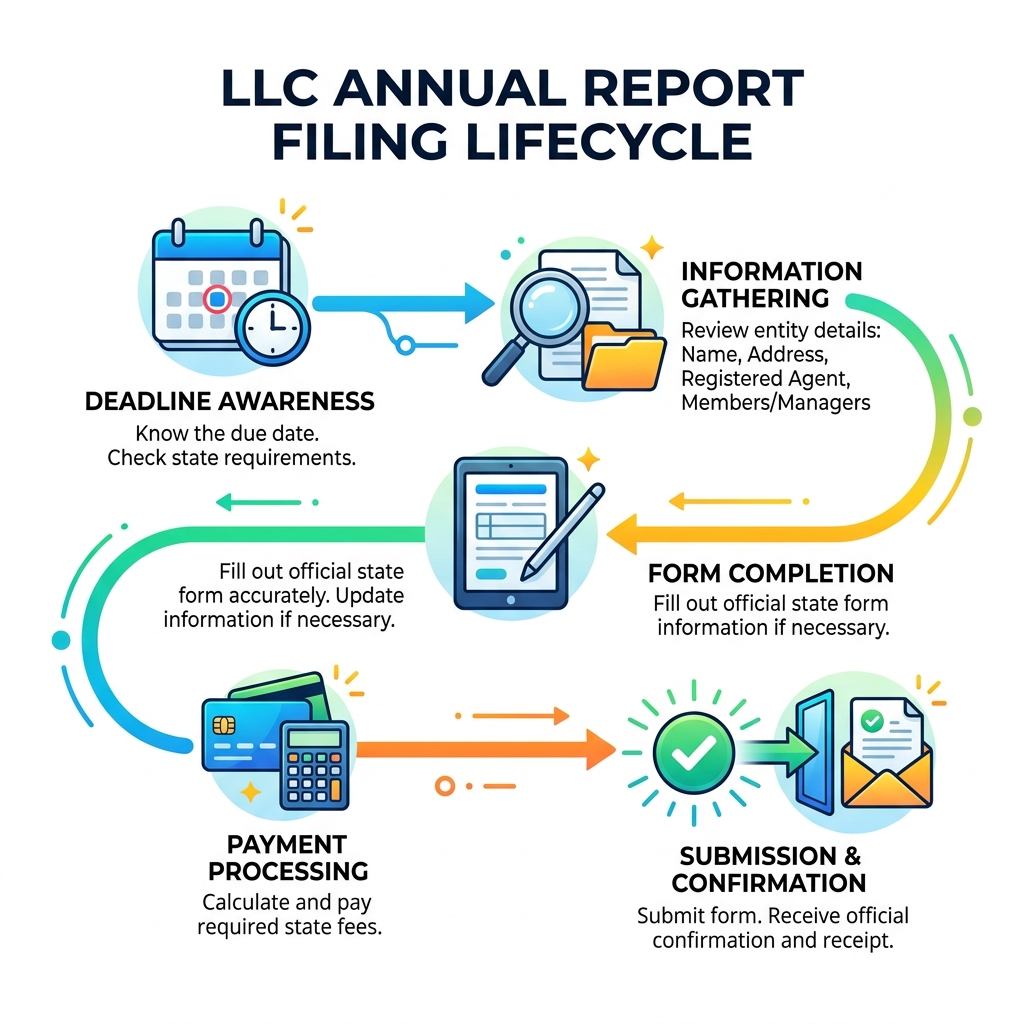
When we talk about LLC annual report filing, we aren’t talking about your taxes. This is a common point of confusion for many business owners. While the IRS wants to know how much money you made, the Secretary of State just wants to know where you are and who is running the show.
Think of it as a “wellness check” for your business. By submitting this report, you are confirming that your entity is still active and that the state has the correct contact information on file. This ensures that legal documents, tax notices, and official correspondence actually reach you.
The primary reason states require this filing is to maintain Information accuracy. Public records need to be reliable. If someone needs to sue your LLC or serve legal papers, they rely on the registered agent information found in these reports.
From your perspective as a contractor, the benefits of staying on top of your LLC annual report filing include:
| Feature | Annual Report | Franchise Tax | Initial Report |
|---|---|---|---|
| Purpose | Update entity info | Fee for doing business | First-time registration |
| Frequency | Yearly or Biennial | Yearly | Once (shortly after setup) |
| Focus | Addresses & Names | Revenue or Flat Fee | Basic setup confirmation |
While every state has its own flavor of paperwork, most LLC annual report filing requirements ask for the same core details:
If you are ready to file but can’t find your paperwork, you can search records by your business name to find your document number or entity ID.

The world of LLC annual report filing is a bit of a patchwork quilt. Some states want to hear from you every year, while others, like California, only require a check-in every two years.
Interestingly, there are eight states that currently do not require LLCs to file annual or biennial reports at all: Alabama, Arizona, Arkansas, Delaware, Missouri, New Mexico, Ohio, and South Carolina. However, even in these states, you might still owe a franchise tax or need to update your registered agent if they move.
Deadlines are the most dangerous part of this process because they vary so wildly.
For those of us working in California, it is vital to follow Statement of Information filing tips to ensure your CSLB license stays valid. A suspended LLC usually leads to a suspended contractor’s license!
The cost of LLC annual report filing ranges from a nominal fee to a significant business expense.
Most states have moved toward online filing and prefer payment via credit or debit card. Some states, like Florida, even offer “Prepaid Sunbiz E-File Accounts” for high-volume filers. If you prefer the old-school way, many states still allow you to print a voucher and mail a check but be prepared for much longer processing times.
The good news is that for most of us, LLC annual report filing is a DIY-friendly task. Most states have spent the last few years making their online portals much more user-friendly.
We can’t stress this enough: do not ignore these deadlines. The consequences start small but get very expensive, very fast.
In California, missing your required Statement of Information can put your LLC into a suspended or forfeited status, which means you may lose good standing with the state. That can create real business problems, including delays in contracts, financing, or licensing. If the issue drags on, your company name may also become vulnerable, making timely filing an important part of protecting your business identity.
In Florida, the $400 late fee is one of the highest in the country. For a small contracting business, that’s a lot of hard-earned profit gone just because a calendar reminder was missed.
This is a big one. As soon as you form an LLC, your information becomes part of the public record. Scammers love this. They will send you official-looking mail that says things like “Annual Minutes Requirement” or “Certificate of Existence Request.”
These letters often feature “Notice of Potential Compliance Violation” in bold red letters and demand fees of $150, $250, or more for services that either aren’t required by law or that you could do yourself for $20 on a .gov website.
Always look for the URL. If it doesn’t end in .gov, be extremely skeptical. We always recommend filing directly through the state portal to ensure your money is actually going to the government and your records are being updated correctly.
Yes, in most states, the LLC annual report filing is the perfect time to update your principal office address or your registered agent. However, some states (like Illinois) have a “catch-22.” In Illinois, if you need to change your registered agent, you must often file a separate “Change of Agent” form before you can successfully complete your annual report online. Always read the state’s specific instructions before you start the process.
If life got in the way and your LLC was dissolved, don’t panic—but do act quickly. Most states allow for “reinstatement.” This usually involves:
For instance, New Jersey reinstatement rules recently changed. As of July 2020, some revoked corporations can reinstate without a tax clearance certificate if they act within two years of revocation. After that two-year window, the process becomes much more complicated.
Generally, yes. Corporations, Nonprofits, and LLCs all have some form of annual or biennial reporting. However, the fees and forms differ. In Florida, a Profit Corporation pays $150, while a Non-Profit only pays $61.25. Professional LLCs (like those for doctors or lawyers) often have additional requirements to prove that their members still hold valid professional licenses.
Keeping your business legal doesn’t have to be a headache. While LLC annual report filing might feel like just another piece of “red tape,” it is the foundation of your business’s legal standing. For contractors, especially those of us in California, staying compliant is the only way to protect the license you worked so hard to earn.
At Contractors License Guru, we specialize in helping California contractors navigate the complexities of the CSLB and the Secretary of State. Whether you are just starting out and need to choose the right business structure or you are looking for expert document filing services to handle the paperwork for you, we’ve got your back.
Don’t let a missed deadline put your tools down. Set those calendar reminders, stay alert for scams, and keep your business in good standing. If you need a hand with your LLC license or any other compliance needs, reach out to us today!